UX Audit & Engagement Strategy for Manorama Online
Manorama Online UX Enhancement - A Case Study by Bijoy Paul
Overview
The project aimed to enhance user engagement and content discoverability on manoramaonline.com through UX-driven insights and actionable recommendations. The goal was to identify usability gaps, improve personalization, and establish a balance between editorial content, user satisfaction, and ad visibility — ensuring a cohesive digital reading experience across devices.
Objective
To conduct a detailed UX audit of Manorama Online and propose strategic improvements that enhance user engagement, accessibility, and monetization without disrupting the core news consumption flow.
Research & Audit Approach
A structured UX audit process was followed, combining heuristic evaluation, competitive benchmarking, and user behavior analysis to identify usability gaps and engagement opportunities. Key audit areas included: Homepage engagement and personalization Story detail and reading experience Quick read and mobile flow Advertisement placement and visibility Accessibility and dark mode adaptability The audit was guided by Nielsen’s 10 usability heuristics and user-centered design principles focusing on efficiency, control, and visual hierarchy.
Key Insights
The homepage lacked personalization and dynamic interaction, causing reduced engagement time. Story pages had strong content but could benefit from clear summaries and interactive reading aids. Ad placements were functional but occasionally intrusive on smaller screens. Users valued quick content formats and visual cues like progress indicators and reactions. Accessibility options like dark mode and audio playback were underutilized opportunities.
UX Recommendations
Homepage Experience
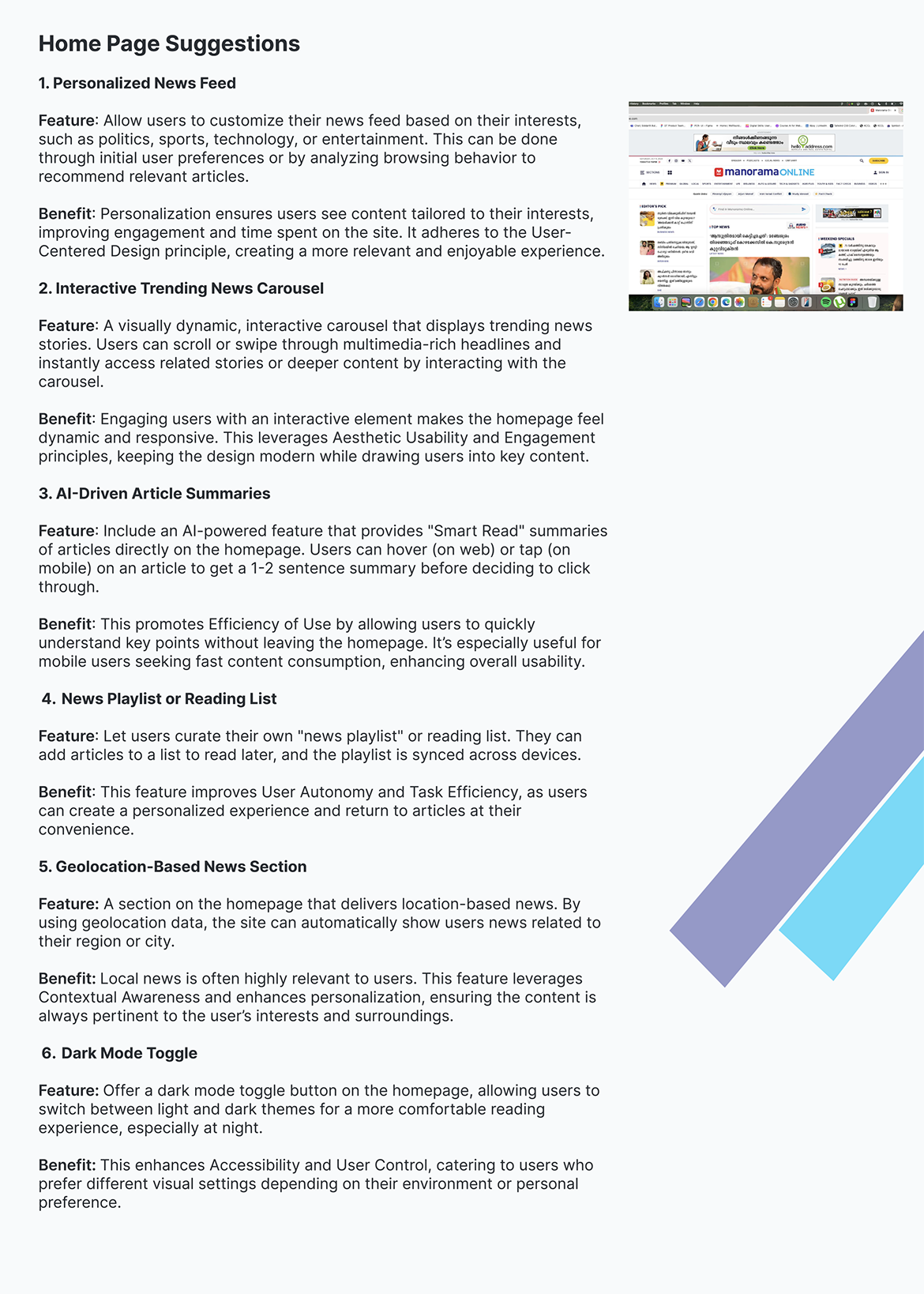
Personalized News Feed: Introduce an adaptive content system allowing users to customize topics of interest. This aligns with the User Control and Freedom principle — giving readers autonomy to shape their news experience. Over time, behavior-based algorithms can enhance Efficiency of Use by surfacing relevant content automatically.
Interactive Trending Carousel:Replace static banners with scrollable, multimedia-rich carousels for trending stories. The dynamic visual feedback promotes Engagement and Aesthetic Usability, encouraging users to explore more headlines.
AI Driven Article Summaries: Integrate hover or tap-based “Smart Read” summaries, helping users preview content quickly. This reduces Cognitive Load and improves Efficiency of Use, especially for mobile users.
News Playlist / Reading List: Allow users to save articles to a personalized reading list synced across devices. Supporting Flexibility and User Control, this feature increases return visits and reading continuity.
Geolocation-Based News: Display location-specific updates automatically, using Contextual Awareness to make content feel more relevant. Users should still have Control to modify their preferred region.
Dark Mode Toggle: Add a dark mode toggle for comfortable reading in various lighting environments. Enhances Accessibility and demonstrates User Respect and Adaptability.
Story Detail Page
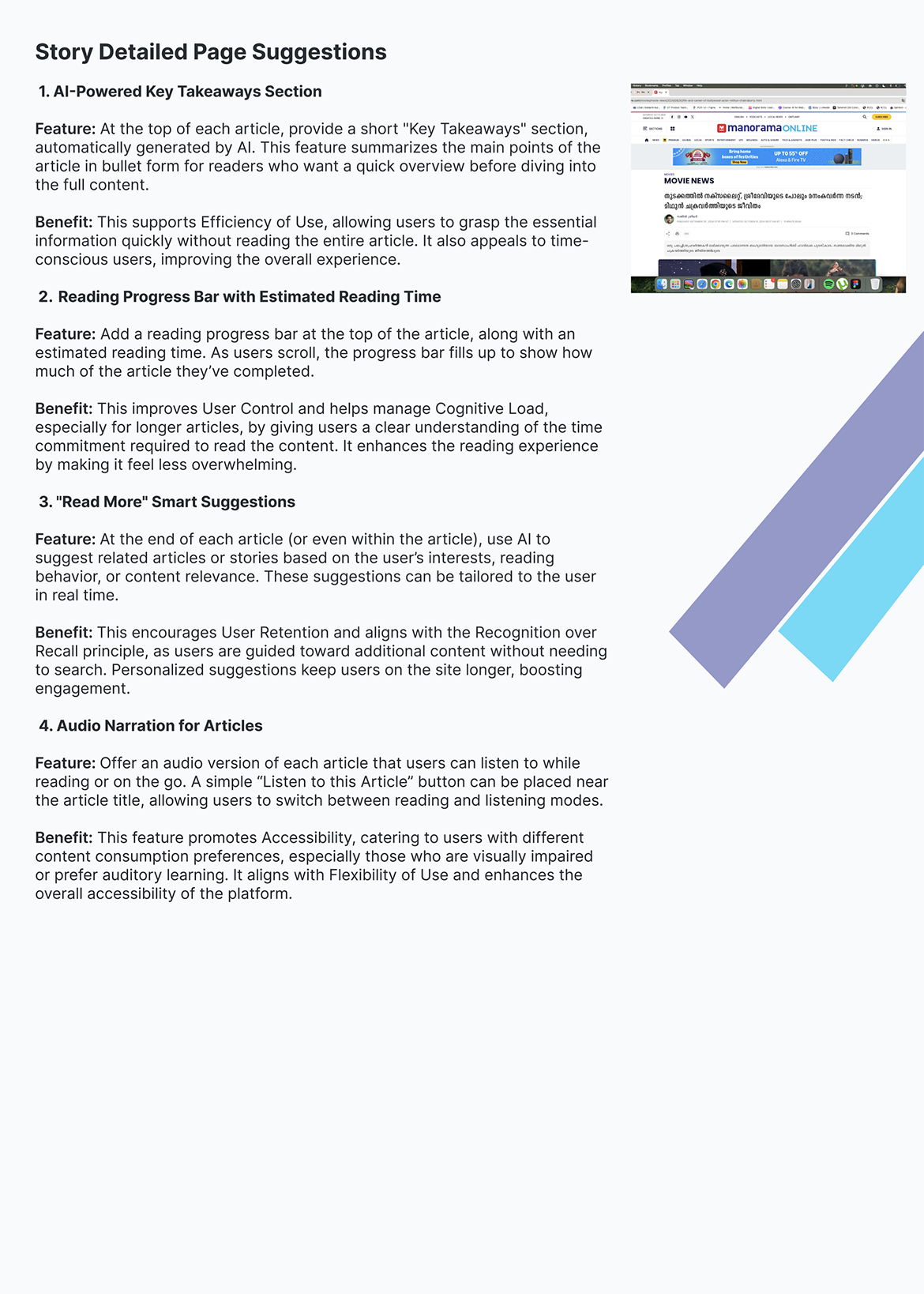
AI Key Takeaways: Present concise, automated summaries at the start of articles. Supports Recognition over Recall by helping users quickly grasp content context before reading in full.
Reading Progress Bar with Estimated Reading Time: Introduce a progress bar and reading duration estimate at the top of each article. Improves Visibility of System Status and Cognitive Load Management — giving users control over their reading commitment.
“Read More” Smart Suggestions:Use AI-driven algorithms to suggest relevant articles based on topic and reader interest. Enhances User Retention and Recognition over Recall by guiding users toward logical content extensions
Audio Narration: Add a “Listen to this Article” button. Supports Accessibility and Flexibility of Use, catering to users who prefer audio content or multitask while consuming news.
Quick Read Page
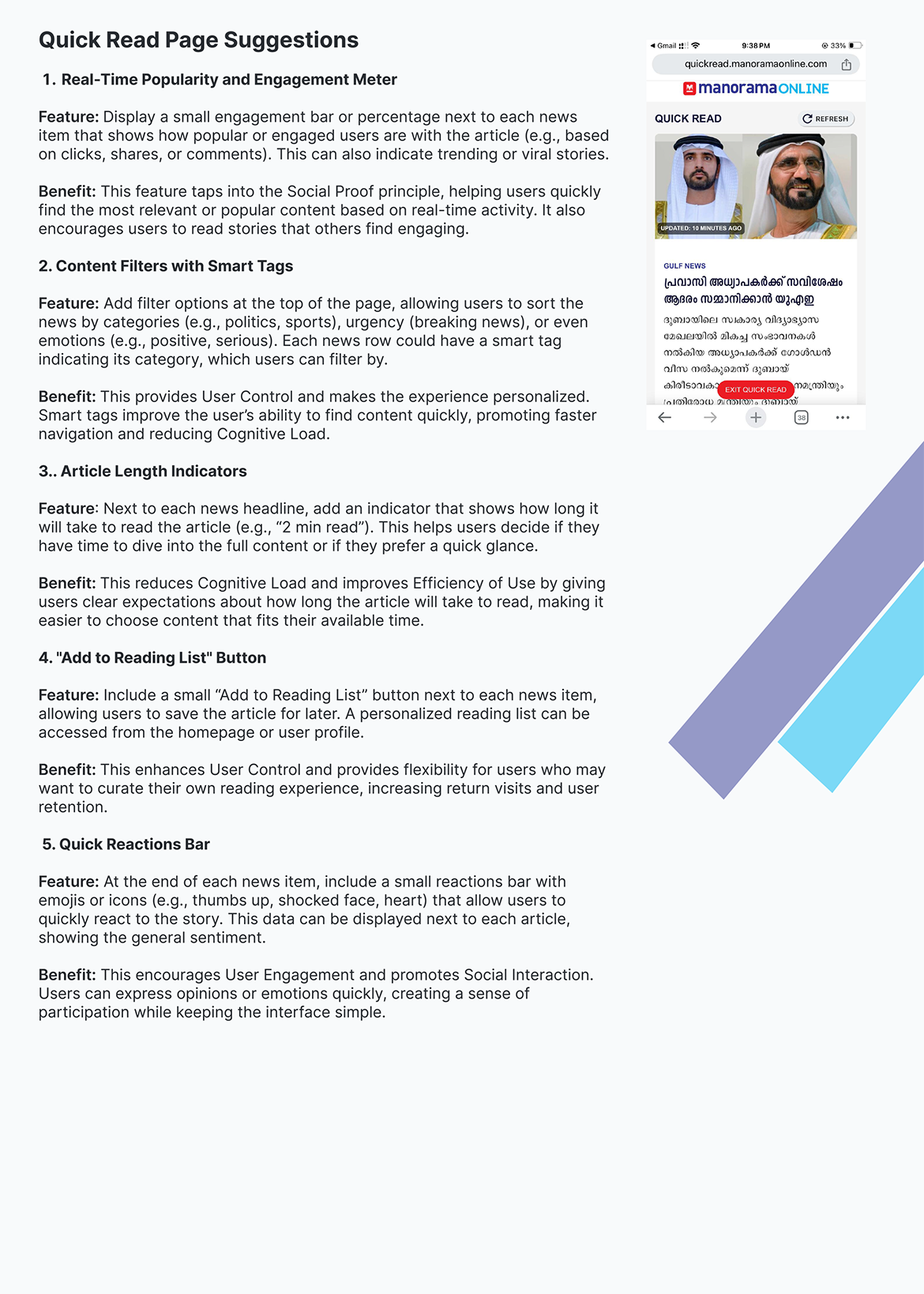
Real-Time Popularity Meter: Display engagement levels (clicks, shares, or comments) as an activity bar. Leverages the Social Proof principle, helping users quickly find trending or high-interest stories.
Content Filters with Smart Tags:Enable category-based and emotion-based filtering (e.g., Sports, Politics, Positive News). Aligns with User Control and Minimalist Design by allowing readers to narrow focus efficiently.
Article Length Indicators:Display approximate reading times (e.g., “2 min read”) next to headlines. Reduces Cognitive Load by setting clear expectations before engagement.
Add to Reading List: Provide an easy “Save for Later” button beside each article. Promotes User Autonomy and consistent Cross-Device Experience.
Quick Reaction Bar:Add emoji-style reactions at the end of stories. Encourages User Engagement and Emotional Connection with minimal friction.
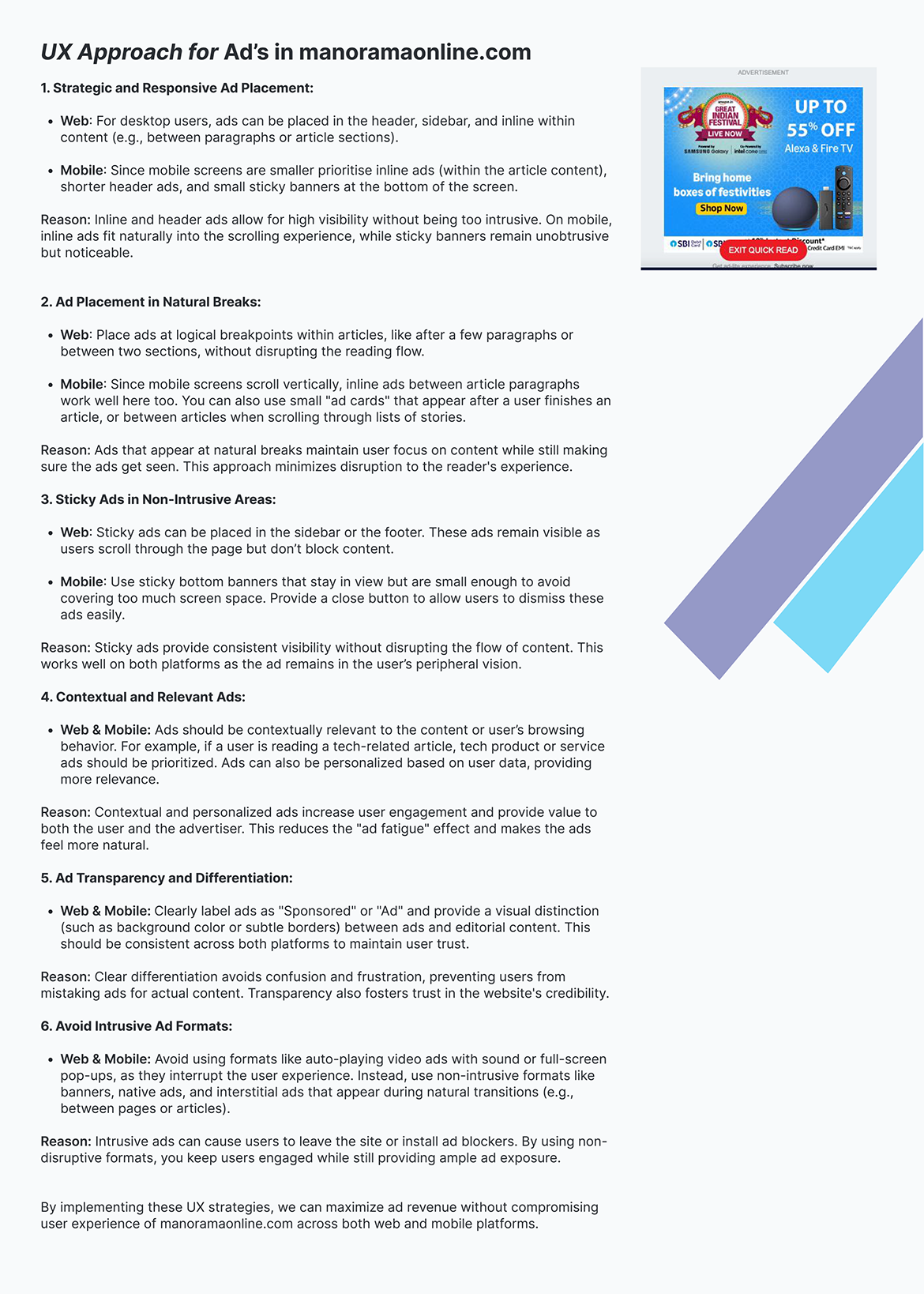
Ad Placement & Experience
Real-Time Popularity Meter: Integrate ads at natural content breaks (after paragraphs or between story sections) to maintain Flow and Readability.
Responsive Ad Layouts:Use context-aware ad designs that adjust based on device and orientation. Ensures Consistency and Flexibility of Use across web and mobile.
Sticky but Non-Intrusive Ads:Place small sticky banners or sidebar ads that remain visible but never obstruct content. Follows Aesthetic Usability and Minimal Intrusion.
Contextual and Relevant Ads: Prioritize ads aligned with the article’s theme or user preferences. Leverages Contextual Design to increase click relevance and reduce ad fatigue.
Transparency and Differentiation:Clearly label ads as “Sponsored” with subtle visual distinction. Reinforces Trust and Credibility, preventing confusion between content and advertisement.
Avoid Disruptive Formats:Eliminate autoplay video ads or pop-ups to maintain User Focus and Freedom. Non-intrusive formats such as inline native ads enhance the overall reading flow.
Outcome
This UX audit redefined Manorama Online as a reader-focused, experience-driven news platform, emphasizing personalization, accessibility, and trust. The recommendations uphold business goals while creating an ecosystem where content feels relevant, reading feels effortless, and ads coexist naturally within the experience.
- Comprehensive UX audit report identifying critical improvement areas for engagement, accessibility, and monetization.
- Actionable recommendations mapped to established UX principles for measurable design impact.
- Clear roadmap balancing editorial goals, ad revenue, and reader satisfaction.
- Enhanced collaboration between UX, editorial, and ad teams for future implementations.